




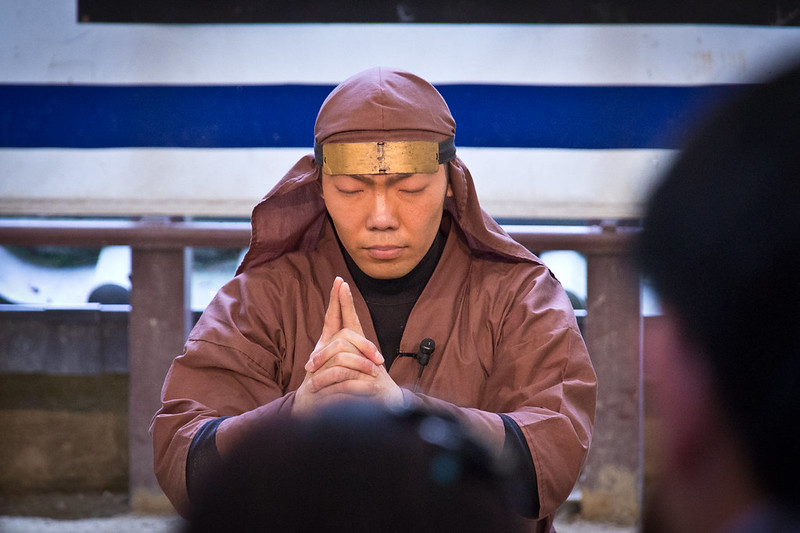
Ninja Museum show at Iga Ninja Museum, Ueno, Japan, courtesy of John Gillespie
One of the most commonly known names for ninja is shinobi (忍), which is short for shinobi-no-mono (忍びの者) “one who operates in stealth.” (We’ll use the two terms interchangeably in this article.) Other names include “kanja” (Sengoku Jidai, mid-1400s through mid-1500s CE) and “onmitsu” (Edo Period, 1603-1868 CE). The roots of the shinobi stretch as far back as the nation of India, roughly around 4000 BCE. The concepts that were eventually codified in China under the title of “The Art of War” originally came from ancient Indian warrior philosophies. Thanks to the long history of cultural exchange between India and China, China and what is now considered Korea, and the Korean peninsula and Japan, these ancient warrior philosophies slowly made their way toward Japan. Eventually, these concepts became known collectively as ninjutsu (忍術).
Japanese folklore holds that shinobi (ninja) descended from a half-man, half-crow demon, but in a less metaphysical sense, what we typically consider as ninja started out as an extension of mountain warrior-monks known as yamabushi (山伏). Generally, the shinobi were a class of warriors who were recruited by samurai and local governments to act as spies and assassins.
While some shinobi were former samurai, most did not hail from such lofty families. They were villagers or farmers who fought for their own self-preservation. Women also served as shinobi (called kunoichi) and were highly successful spies and assassins. They often infiltrated enemy castles as servants, dancers, or entertainers. Most shinobi came from Iga and Kōga regions, from farmlands and quiet villages that, over time, became ninja strongholds.
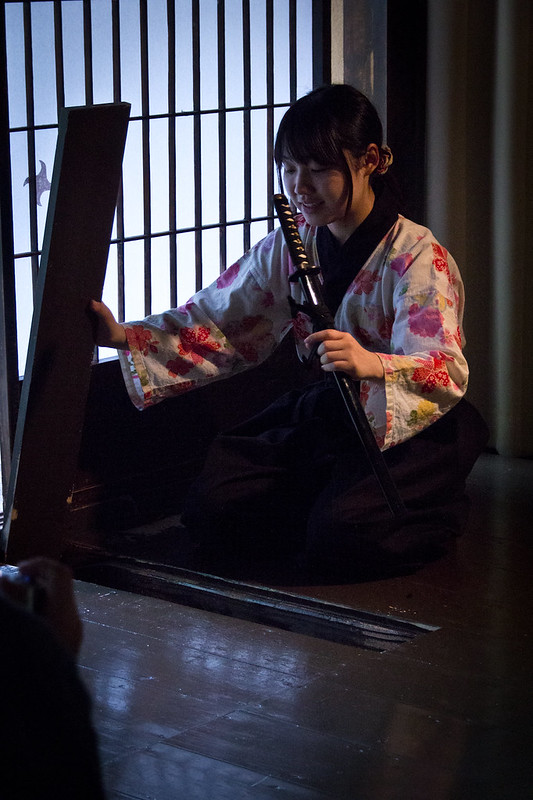
Ninja Museum show at Iga Ninja Museum, Ueno, Japan, courtesy of John Gillespie
Ninjutsu is difficult to define because it encompasses many disparate topics. One is what modern people consider “martial arts:” prescribed physical techniques, armed or unarmed, which practitioners repeat thousands of times to train their bodies to utilize without thought and at a second’s notice. Another could be considered as “military strategies” or “military tactics:” surveying and acquiring knowledge of the land and its people; drawing up plans of attack, moving resources into the right places and utilizing them so that a smaller force can overcome a larger target—in short, creating the conditions necessary for victory.
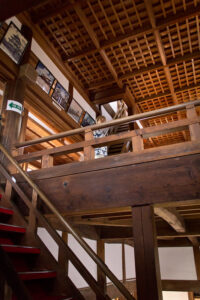
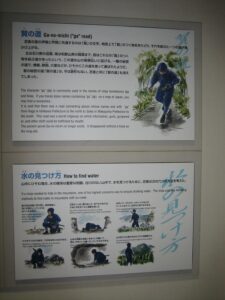
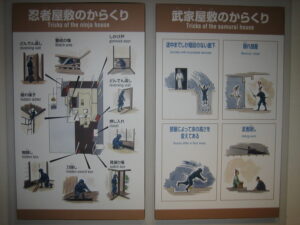
(Top two: Ueno Castle, courtesy of John Gillespie; bottom two: Iga Ninja Museum displays, courtesy of Jeremy Hall)
Yet another activity of shinobi could be considered as “espionage,” such as infiltration of organizations and locations; gathering and filtering information both in the short- and long-term; passing information on to others; creating and disseminating misinformation; gathering and disseminating political and cultural awareness so that local issues can be used to one’s own advantage; working as a small team to accomplish tactical goals such as assassinations, etc. And yet another could be considered as “guerilla warfare,” including the training of locals to fight; the utilization of farm implements or other items at hand as weapons; controlling the local terrain and the flow of goods; or sabotage and theft of resources.
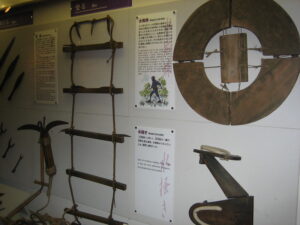
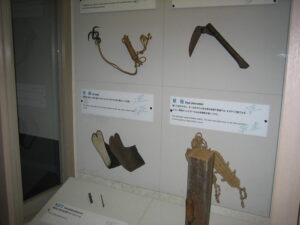
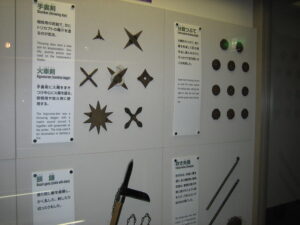
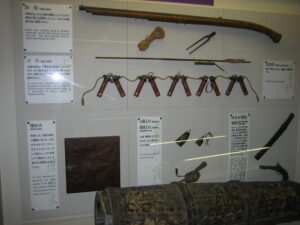
(Iga Ueno Museum Displays on ninja weapons, courtesy of Jeremy Hall)
The power of ninjutsu is not just in the physical or knowledge-based techniques taught over the centuries—it lies in the juxtaposition of the concept of shinobi versus the concept of the samurai. Particularly before the Mongols invaded in the late 1200s, honorable combat in Japan followed certain ideals: combat was often openly declared; the names of the warriors and their clans were typically yelled out before combat began; retreat was discouraged; ritual suicide to regain honor was acceptable; belief in a rigid and hierarchical social structure was absolute; and behavior in a noble manner befitting a samurai was required. Of course, samurai of the Kamakura Period (1185-1333 CE) behaved more practically than the ideal; for example, retreat was acceptable if done to preserve one’s lord’s position of power, and samurai did not actively seek to die, but considered death in the act of advancing the cause of one’s lord to be honorable.
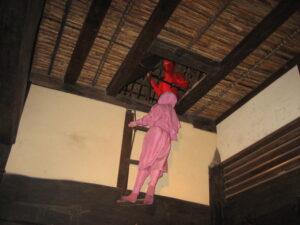
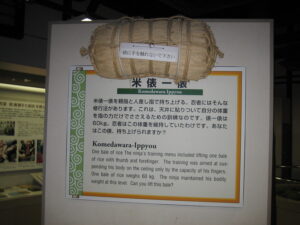
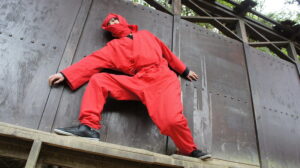

(Top two photos: Iga Ueno Museum, courtesy of Jeremy Hall; bottom left: Kōga ninja couresty of go.biwako; bottom right: shuriken courtesy of Damien McMahon)
Now consider the role of the shinobi: a shadow warrior, one with an assortment of skills in a variety of skillsets, sent to infiltrate, destabilize, perhaps assassinate—all without those pesky rules of honorable combat that made the samurai so revered. The fortunes of entire clans could change in a heartbeat, thanks to shinobi. The power of the ninja was not just in their skills, but in the very idea that, beneath the surface, powerful people who publicly upheld the rigid social structure of their day secretly undermined that very same system by hiring shinobi to upset the balance of power, all in the name of total victory.

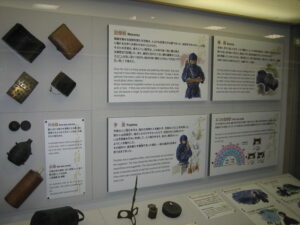
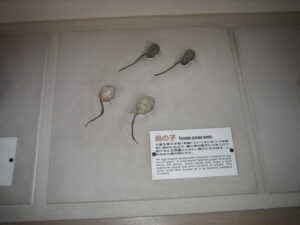
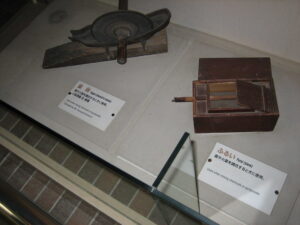
(Iga Ueno Museum, courtesy of Jeremy Hall)
Small wonder that the term shinobi came to encompass not just the skill of the individual person, but the suggestion that everyday, ordinary people could defeat the wealthy, the powerful, and the revered—and then melt back into the shadows to do it all again. On top of it all, shinobi were generally paid well, which resulted in the transfer of wealth from upper to lower classes, further threatening the social order.
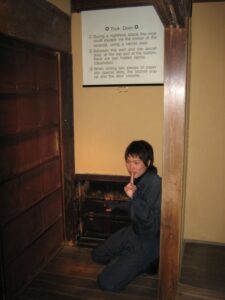
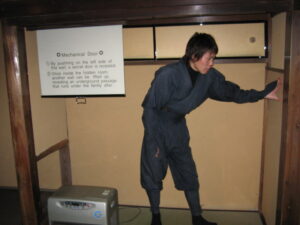

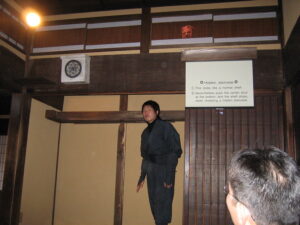
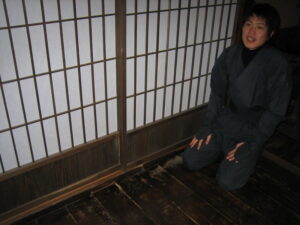
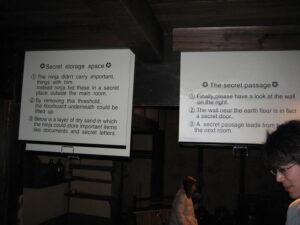
(Iga Ueno Ninja Museum, courtesy of Jeremy Hall)
The very nature of ninjutsu is one of secrecy and the power of suggestion. The history of the shinobi is fraught with legend and hearsay, and there are plenty of historians who challenge traditional stories of the first use of shinobi, the origins of schools of ninjutsu, and the very existence of those who are, according to legend, the first ninja. So, it’s sensible to take historical stories like those below with a grain of salt.
The First Shinobi?
Traditionally, the first Japanese noble thought to have utilized the services of a shinobi/ninja was Prince Shōtoku (聖徳太子)(574-622), who employed his right-hand man, Otomono Sahito as a spy. Around 907 CE, a wave of Tang generals escaped from China to Japan, and their contributions may have added more philosophies and battle tactics to the general arsenal of the nascent shinobi class. Yet another wave of knowledge came around the year 1020 CE, when Chinese monks came to Japan, bringing with them more fighting philosophies and medicine that originated in ancient times from India.
The First School of Ninjutsu (Maybe)
In 1162 CE, Daisuke Nishina (仁科大助) (a.k.a. Daisuke Togakure (戸隠大助)), a samurai of the Genji Clan from Togakure in Shinano Prefecture, fought against the Heike (Taira) Clan and lost. He fled the region and settled in Iga Prefecture, where he met Kain Doshi, an exiled Chinese warrior-monk, while wandering the mountains. Daisuke learned Chinese and Tibetan guerrilla warfare tactics, and, legend holds, combined what he learned with what he did to try to defeat the Taira into the foundations of Togakure-ryu, the first school of ninjutsu. That said, this account has been vehemently contested with the accusation that much of the lineage of Togakure-ryu was anachronized and is therefore inaccurate.
The Iga and Kōga (Kōka) Shinobi
Generally speaking, there are two major groupings of schools of ninjutsu: the Iga-Ryū (Iga School) (伊賀流)and the Kōga-ryū (甲賀流, “School of Kōga”). It should be noted that these two schools were loose structures of families, the Kōga school being the looser of the two. Many people moved in and out of these prefectures, taking jobs and training. Iga-Ryū and Kōga-Ryū shinobi often worked together, often at the behest of the same family or warlord.
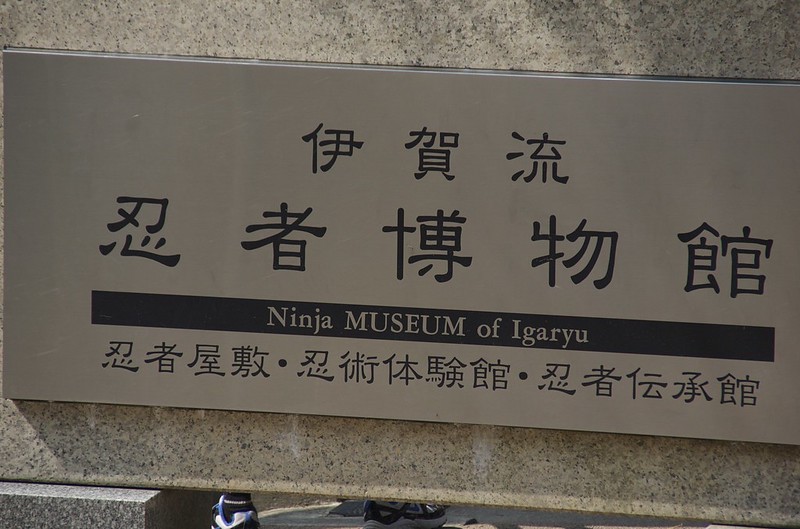
Iga Museum of Ninjutsu, courtesy of Damien McMahon
Iga is now located within Mie Prefecture, and is generally a difficult area to farm. The people of this region supplied lumber for shrines from the Nara Period (710-794 CE) until the Kamakura Period (1185-1333 CE), when the style of shrines they supplied lumber for fell out of favor. Iga descended into war and guerrilla warfare was the name of the game. Finally, during the early Muromachi Period (1336-1573), the people of Iga formed their own republic-style government called Iga Sokoku Ikki (伊賀惣国一揆) and started hiring out their people as shinobi. Eventually, the Iga School was attacked by none other than Oda Nobunaga, who killed many Iga shinobi and cornered the rest in two castles, and then declared a ceasefire. During the chaos of the time after Oda’s assassination, Tokugawa Ieyasu, the future shogun, escaped to Mikawa via Kōga and Iga lands at the suggestion of Hattori Hanzou, an Iga shinobi. Tokugawa survived, and after he rose to power, he utilized Iga shinobi to guard his castle, going so far as to name one gate Hanzo’s gate because of its proximity to the Hattori Clan residence within Edo.
Roughly speaking, there were three classes of ninja: jonin (high man), who gave orders to the chunin (middle man), who passed on the orders to the genin (ordinary shinobi). Skilled ninja could ascend ranks beyond their social class. That said, this ranking may have been an anachronism; it now forms a lot of the lore featured in ninja-themed anime, in which characters need to rank up in their quest to “be the very best.”
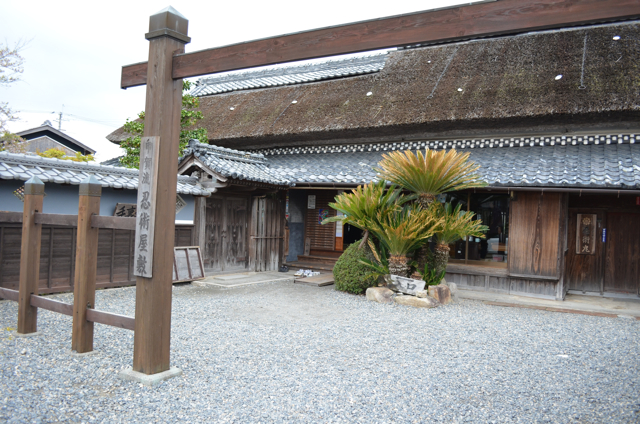
Kōga Museum, courtesy of AO
Meanwhile, the Kōga-Ryū rose to prominence around the end of the Muromachi Period (mid to late 1500s). Like the shinobi of Iga, the Kōga shinobi rose to prominence from a relatively self-governing system of union representatives taking votes to direct the important decisions in the district of Kōga, now in modern-day Shiga Prefecture. Because of the prevalence of medicinal herbs in the area, the Kōga shinobi were well-known for their use of medicine, herbs, and poisons. Led by the Rokkaku Clan, their base of operations was Kannonji Castle, and because of their relative independence, they eventually caught the attention of the Shogun Ashikaga.
Ashikaga attacked and the Rokkaku eventually fled to Kōga Castle. Ashikaga followed, ultimately attacking Kōga Castle and driving the Rokkaku out again. They fled and Ashikaga again followed, but his progress was severely hampered by the guerilla warfare tactics, surprise attacks, and use of fire and smoke of the Kōga shinobi. Ashikaga was defeated by these tactics, and the fame of the Kōga shinobi spread throughout Japan. They were hired by many a daimyou (warlord) for protection and to attack their rivals, including, eventually, Tokugawa Ieyasu, who also hired Iga Shinobi for protection. Tokugawa would utilize the skills of the Kōga Shinobi to destabilize an enemy castle before conquering it in his quest to unify Japan.
The Age of Shinobi
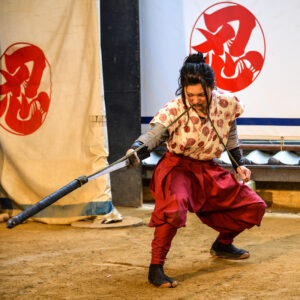
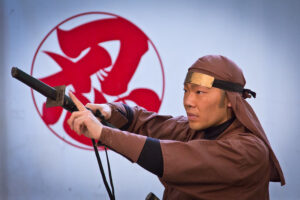
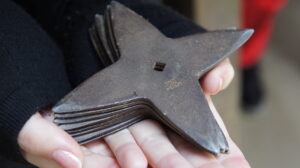
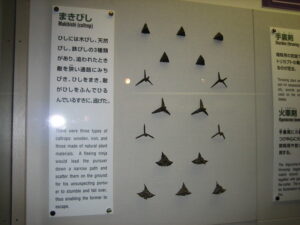
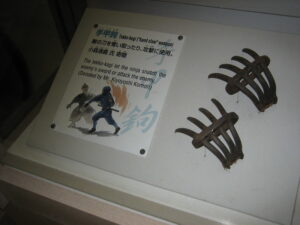
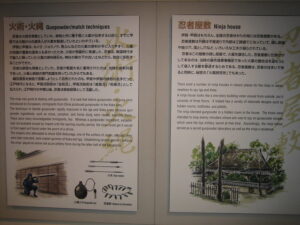
(Top left: Iga Ninja Academy courtesy of m_louis; top right: Iga Ninja Ueno Museum Show courtesy of John Gillespie; middle left: Kōga shuriken courtesy of go.biwako; middle right and bottom two: Iga Ninja Museum, courtesy of Jeremy Hall)
Some consider the Age of Shinobi as the period between 1336 CE and 1600 CE, during a period of constant wars and chaos. They played key roles during the Nanbukucho Wars (1336-1392), the Onin War (1460s), and Sengoku Period (1467-1568). All of this culminated in the mid to late 1500s, in which three men formed the beginning, coalescing, and finalizing of a much more united Japan. Oda Nobunaga, one of these three, saw the Iga and Kōga ninja strongholds as a threat. Nobunaga quickly defeated the stronghold in Kōga and co-opted the Kōga shinobi forces, but he had to utilize a force of more than 40,000 men to vanquish the Iga ninja who fled to nearby provinces and the mountains of Kii after their defeat. Although their strongholds were destroyed, the ninja were too dispersed and too numerous to disappear. Tokugawa Ieyasu succeeded in uniting much of Japan under his rule and stopped the constant civil war that had come to characterize life in Japan until that point, often utilizing shinobi to do so. For quite some time, the Tokugawa continued to hire shinobi as guards, taking comfort in their skills to repel any attacker.
Shinobi Today

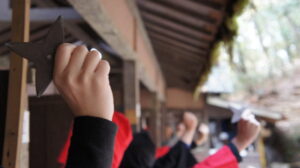

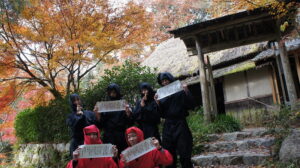
(Kōga Ninja Museum, courtesy of go.biwako)
Togakure-Ryū still exists, by the way. It features a very different concept of “martial arts” education than any other school in Japan, and teaches everything from survival skills to the utilization of specialized weapons that can be used both for defense and traversing difficult terrain. The Ige-Ryū school of ninjutsu also still exists and is currently run by the 16th Grand Master, Souke Saito. The link to the school’s webpage is below. The Kōga-Ryū school of ninjutsu, unlike the Iga-Ryū school, does not still exist today. The 14th and last Grand Master, Souke Fujita Seiko (1898-1966), declared that he would not pass on the skills of ninjutsu, and died with no heir to the school.
The Seven Most Famous Ninja
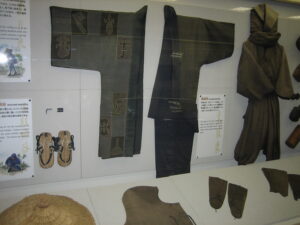
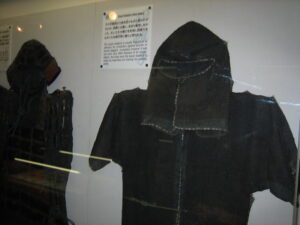
(Iga Ueno Museum, Ninja Clothing courtesy of Jeremy Hall)
Fujibayashi Nagato: 16th century leader of the Iga ninja. His family made sure that the ninja lore and techniques did not die out. His descendant, Fujibayashi Yastake, is responsible for the Bansenshukai (the Ninja Encyclopedia).
Momochi Sandayu: a leader of the Iga ninja (2nd half of 16th century) who taught after his retirement that ninjutsu should only be used as a last resort; should only be used to save a ninja’s life; should only be used to aid his or her domain; or, to serve the ninja’s lord.
Ishikawa Goermon: sometimes referred to in Folk Lore as the Ninja Robin Hood. He was born into a samurai family that served the Miyoshi clan of Iga and trained under Momichi Sandayu. After the Nobunaga’s invasion he fled Iga and spent 15 years robbing wealthy merchants and rich temples.
Hattori Hanzo: served as a ninja during the Sengoku period. He is famous for smuggling Tokugawa Ieyasu to safety in 1582. His legend lives on in numerous manga and movies. His character is often depicted as having magical powers to appear and disappear, to predict the future, and to move objects with his mind.
Mochizuki Chiyome: was the wife of the samurai Mochizuki Nobumasa of the Shinano domain. After her husband’s death during the Battle of Nagashino (1575), she created a band of 200 to 300 kunoichi, (women ninja) who disguised themselves as wandering Shinto shamans who infiltrated castles and temples. They were successful spies, messengers, and assassins.
Fuma Kotaro: was an army leader and ninja jonin (ninja leader) of the Hojo clan of Sagami Province. After the fall of the Hojo clan, Kotaro and his ninja band became bandits. According to legend he served Tokugawa Ieyasu and caused the death of Hattori Hanzo.
Jinichi Kawakami: studied ninja from the age of 6 and became proficient in combat and espionage techniques, as well as, chemical and medical knowledge passed down from the Sengoku period. He is considered to be the last ninja in the traditional sense because he refused to teach apprentices sacred, ancient ninja skills. He felt that even if modern generations learned ninjutsu, they could not practice it because he said: “Ninjas proper no longer exist. We can’t try out murder or poisons.”
Sources:
Nuwer, Rachel. “Meet Jinichi Kawakami, Japan’s Last Ninja.” Smithsonian Institution, August 21, 2012.
Szczepanski, Kallie. “The History of Japanese Ninjas.” ThoughtCo., Oct. 18, 2021, thoughtco.com/history-of-the-ninja-195811.
Ige Ninjutsu Museum (has info in English): https://www.iganinja.jp/
Ige-Ryū School of Ninjutsu in Australia; credentials of the latest Grand Master: https://www.shinbukan.com.au/saitos
Kōga shinobi: https://ninja.fandom.com/wiki/Koga
Kōga Shinobi Museum: https://www.shinobinosato.com/en/heritage/spot2.html